Olivia Hunter's pregnancy
The InnocentOlivia Hunter’s pregnancy threads through the novel as both a concrete, repeatedly confirmed condition and a measure of what remains possible for her and Matt Hunter. First folded into Matt’s hopeful picture of a family home, it later becomes a fact he accepts without demanding an explanation, a life he invokes in confronting the past, and a reason Kimmy Dale cannot carry out her threat. Its eventual fulfillment, in the birth of Benjamin, gives the story’s closing domestic scene a future that earlier seemed precarious.
A future imagined before it is secure
When Matt sits outside the house he plans to buy, his hopes are specific: he imagines moving in with his pregnant wife Olivia, raising the baby, and perhaps having more children, since Olivia wants three. The three-bedroom house and its unfinished basement are not merely property details; they offer a setting for the family life he tries to picture after prison. He imagines laughter at dinner and a child coming to their bed after a nightmare. The pregnancy gives that imagined future a present-tense anchor, though Matt can only almost see the life ahead.
The domestic vision includes practical plans as well as sentiment. The old, rusty swing set will have to go, and Olivia has already chosen a cedar replacement because it is guaranteed not to give the children splinters. The specificity makes the family future feel planned and ordinary, yet the house is still only under contract and the replacement set is two years away. Pregnancy therefore belongs to a future Matt can envision but has not secured: hope is present, while stability remains to be built.
Confirmation amid marital distance
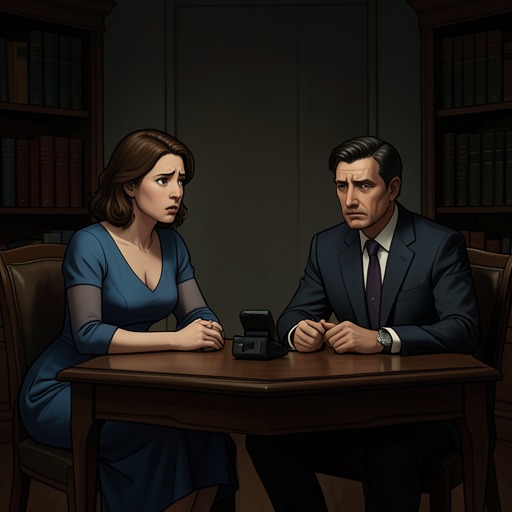
During a cab ride, Matt asks whether Olivia visited Dr. Haddon. She says she did, and that everything is fine and the pregnancy should be normal. The exchange confirms reassurance about the pregnancy, but the surrounding interaction reveals distance between the spouses: Olivia stares out the window and says little, and when Matt takes her hand, she lets him hold it without returning the gesture. The driver’s surprise at the news, and Matt’s answer that they are having a baby, briefly makes the pregnancy a shared public fact even while the couple’s closeness remains uncertain.
Later, Matt asks Olivia two questions before she begins telling him what she has been withholding. He first asks whether she is pregnant. When she says yes, she answers his unasked second question too: the baby is his. Matt responds that the rest does not matter to him and that they can run away if she wants. His offer does not force a disclosure or make her past disappear; it shows that he is willing to accept the pregnancy and their relationship without requiring her to tell him everything. Olivia says she does not think she can run again. Her exhaustion sets a limit on escape, while Matt’s response makes room for staying together without immediate resolution.
A stake in scenes of danger and reckoning
The pregnancy changes what is at stake when Kimmy confronts Olivia with a gun. Olivia says she is pregnant, and Kimmy acknowledges that she knows. Olivia then tells her that she will not kill the baby. Kimmy’s face falls; she identifies the videotape as the reason for what has happened. In that confrontation, the unborn child is not an abstract symbol: Olivia appeals to the life Kimmy knows is at stake, and the revelation about the tape helps expose the cause behind the confrontation.
The pregnancy also alters Matt’s effort to address Stephen McGrath’s death with Stephen’s parents, Clark and Sonya McGrath. Matt apologizes and says he understands better now that his wife is pregnant, before insisting that the conflict must end there. The evidence does not suggest that fatherhood erases his responsibility or settles the McGraths’ grief. Rather, the approaching child sharpens Matt’s sense that the old chain of pain must stop, even as Clark challenges the idea that an apology makes everything right.
Fulfillment and family continuity
The story’s ending confirms that the pregnancy has resulted in a child: Olivia and Matt’s son Benjamin is three months old. In the backyard, Olivia plants a flower bed while Benjamin lies on a mat nearby, making a happy cooing noise. Kyra is with them in the garden; she has lived with the family for a year and plans to stay until graduation. The closing image thus expands the family Matt once imagined beyond the couple and their expected baby, placing Benjamin within a household that also includes Kyra.
Matt looks at Olivia, Kyra, and Benjamin, and Olivia and Kyra smile back at him. Benjamin’s noise carries across the yard, and Matt feels lightness in his chest. The ending gives the pregnancy its fullest consequence without presenting family life as a return to an untouched past: the child arrives after danger, secrets, and grief, and the household includes relationships formed through that history. What began outside a house Matt had not yet bought becomes a living family scene, a modest but decisive answer to his earlier effort to imagine a future.